
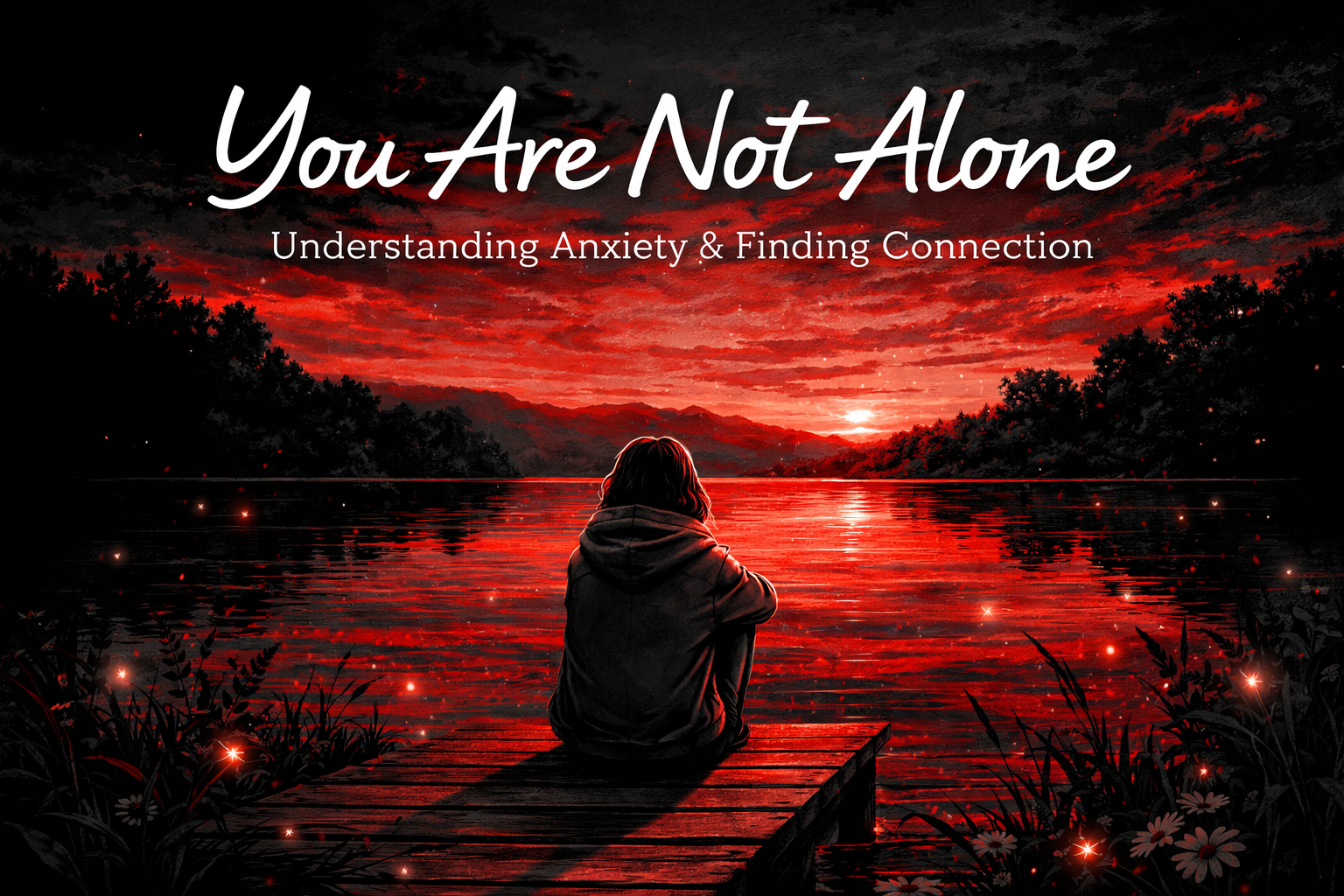
For many people living with anxiety, one of the hardest parts isn’t just the racing thoughts or the overwhelming feelings, it’s the sense that you’re the only one experiencing it.
Anxiety has a way of making the world feel smaller and quieter. Even when you’re surrounded by people, your mind can convince you that no one else understands what’s happening inside your head. You might look around and see others going about their day normally while your thoughts feel loud, urgent, or impossible to escape.
In those moments, it can feel incredibly isolating.
But the truth is that millions of people experience anxiety, intrusive thoughts, and mental spirals every day. The thoughts may look different from person to person, but the underlying experience of feeling overwhelmed by your own mind is something many people quietly struggle with.
The challenge is that anxiety often thrives in silence.
Many people don’t talk openly about their mental health struggles because they feel embarrassed, ashamed, or worried about being misunderstood. Others may not even have the language to explain what they’re experiencing. As a result, people often carry these feelings privately, believing that their struggles are unique or that something is “wrong” with them.
This is one of the reasons anxiety can feel so lonely.
When thoughts begin to spiral, the mind can create stories that reinforce isolation.
You might think:
Why does my brain do this?
Why can’t I just turn it off?
What if something is wrong with me?
These questions are incredibly common for people navigating anxiety and intrusive thoughts. Yet because these experiences aren’t always visible, it’s easy to assume that no one else understands.
In reality, many people are asking themselves those same questions.
Anxiety is deeply connected to the brain’s natural survival system. Our minds are designed to detect potential danger and keep us safe. For people who experience anxiety, that system can become overactive, causing the brain to constantly scan for threats, even when none are present.
This can lead to racing thoughts, overthinking, intrusive images, or the constant feeling that something is wrong.
When those thoughts appear, they can feel urgent and convincing. They can make it seem as though you need to solve the thought immediately or find certainty before you can relax.
But thoughts, even the loud ones, are not always telling the truth.
One of the most important things to remember during anxious moments is that your mind is trying to protect you, even if the alarm it’s sounding isn’t accurate. Anxiety isn’t a personal failure or a sign of weakness. It’s often the result of a nervous system that is working overtime to keep you safe.
Understanding this can begin to soften the shame that many people feel about their mental health.
The more we talk about anxiety openly, the easier it becomes for people to realize that their experiences are shared by many others. Conversations about mental health help break the silence that often surrounds these struggles and replace it with understanding and compassion.
At Rooted Reminder Foundation, we believe that no one should have to navigate their mental health alone. By creating spaces for education, storytelling, and conversation, our hope is to remind people that the thoughts and feelings they’re experiencing are part of a broader human experience.
There are tools, resources, and communities available to support you.
And even if it may not always feel that way in the moment, there are countless people who understand exactly what it feels like to sit with a mind that won’t slow down.
If you’re experiencing anxiety, intrusive thoughts, or overwhelming moments, know that you are not alone in that experience.
Your thoughts may be loud, but they do not define who you are.
And sometimes the most powerful first step toward healing is simply being reminded that others are walking this path too.
Let this be a reminder:
Even in overwhelming moments, you are not alone.
